

 wewe
wewe 
Whale wallet tracking has become a widely discussed practice in the cryptocurrency space, especially among investors trying to understand market movements. Large holders—often referred to as “whales”—can influence price direction simply by moving significant amounts of digital assets.
For individual investors, monitoring these wallets offers a way to observe patterns, gauge sentiment, and make more informed decisions without relying solely on speculation.
What Is Whale Wallet Tracking
Whale wallet tracking refers to monitoring blockchain addresses that hold large amounts of cryptocurrency. Because blockchain transactions are public, anyone can observe when large transfers occur, even if the identity behind the wallet remains unknown.

These wallets often belong to institutional investors, early adopters, exchanges, or high-net-worth individuals. When they move funds, it can signal potential shifts in market activity.
For example, a large transfer of Bitcoin to an exchange may suggest an intent to sell, while movement to cold storage may indicate long-term holding.
How Whale Tracking Works in Practice
At its core, whale tracking relies on publicly available blockchain data. Specialized tools and platforms scan networks like Bitcoin and Ethereum for large transactions and flag them based on size thresholds.
Here’s how it typically works:
- Wallets with large balances are identified
- Transactions exceeding a set value are monitored
- Alerts are generated when significant movements occur
- Data is interpreted for potential market impact
A trader might notice a sudden transfer of millions in crypto to an exchange and pause before entering a position. It doesn’t guarantee a price move—but it adds context.
Whale Tracking vs Traditional Market Signals
Understanding how whale tracking compares to traditional analysis helps clarify its role.
| Factor | Whale Wallet Tracking | Traditional Market Signals |
|---|---|---|
| Data Source | Blockchain activity | Price charts and indicators |
| Transparency | Public ledger | Market-driven data |
| Timing | Often real-time | Slightly delayed |
| Interpretation | Context-dependent | Indicator-based |
| Accessibility | Widely available tools | Requires analysis skills |
Both approaches can complement each other rather than compete.
Why Whale Activity Matters
Large holders have the ability to influence supply and demand dynamics. Even a single transaction can affect market sentiment, especially in less liquid assets.
Some common signals investors watch for:
- Large inflows to exchanges
- Sudden accumulation in private wallets
- Repeated transactions from the same address
These patterns don’t always lead to immediate price changes, but they often attract attention and influence short-term behavior.
Common Tools and Platforms
Several platforms specialize in whale wallet tracking by aggregating blockchain data into readable insights.
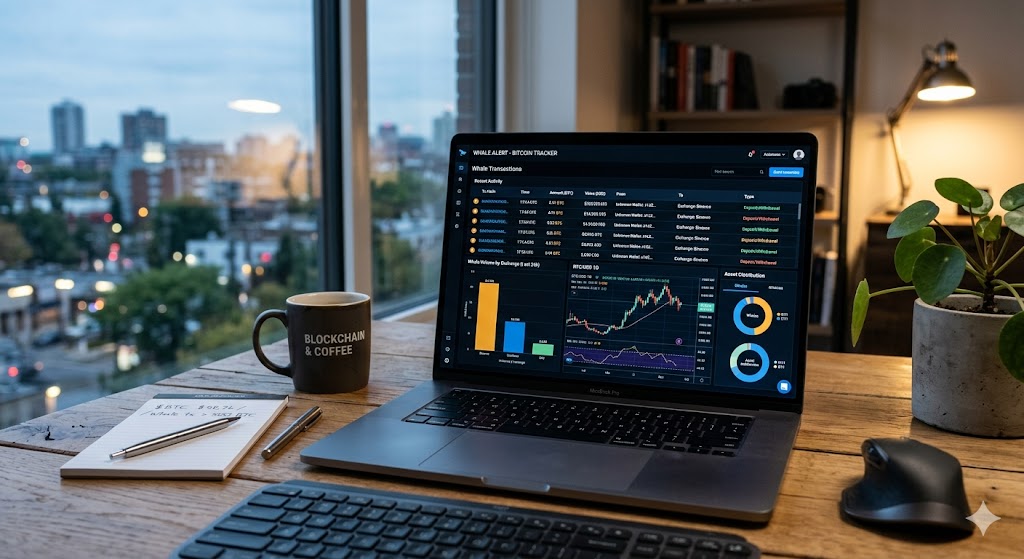
These tools may include:
- Transaction alert services
- Blockchain explorers
- Portfolio tracking dashboards
Some platforms also categorize wallets, labeling them as exchanges, funds, or unknown entities, which adds useful context.
Pro Insight
Whale tracking is most useful when viewed over time rather than as a single event. One large transfer might not mean much on its own, but repeated patterns—such as gradual accumulation—can reveal stronger signals.
Consistency tells a better story than isolated data points.
Limitations and Risks
While whale wallet tracking can be informative, it has clear limitations.
- Wallet ownership is often anonymous
- Transfers don’t always reflect intent
- Market reactions can be unpredictable
- Data overload can lead to overanalysis
For instance, a whale might move funds between their own wallets, which appears significant but has no real market impact.
That’s why context matters.
Quick Tip
Use whale tracking as a supplementary tool rather than a primary strategy. Combine it with broader market research to avoid reacting too quickly to isolated movements.
When Whale Tracking Makes Sense
This approach tends to be more useful in certain situations:
- During periods of high volatility
- When trading large-cap cryptocurrencies
- When monitoring emerging altcoins with low liquidity
A practical scenario illustrates this well.
An investor tracking Ethereum notices repeated accumulation by a known large wallet over several days. Instead of acting immediately, they wait for confirmation from price trends before making a move. This balanced approach reduces the risk of misinterpretation.
Frequently Asked Questions
What is a whale in cryptocurrency
A whale is an individual or entity that holds a large amount of a specific cryptocurrency, enough to potentially influence market prices.
Is whale wallet tracking legal
Yes, it relies on publicly available blockchain data and does not involve accessing private information.
Can whale tracking predict market movements
It can provide signals, but it does not guarantee price direction or outcomes.
Are whale wallets always identifiable
No, most wallets are anonymous, though some are labeled based on known activity such as exchanges.
Do all large transactions impact prices
Not necessarily. Some transfers are internal or unrelated to buying or selling activity.
Conclusion
Whale wallet tracking offers a unique lens into the cryptocurrency market by highlighting movements that might otherwise go unnoticed. While it’s not a standalone strategy, it can add valuable context when combined with broader analysis.
Used carefully, it helps investors stay informed without overreacting to every market shift.
https://www.sec.gov
https://www.cftc.gov
https://www.federalreserve.gov
https://www.investor.gov
This article is for general informational purposes only and does not provide legal, financial, medical, or professional advice. Policies, rates, and regulations may change over time.